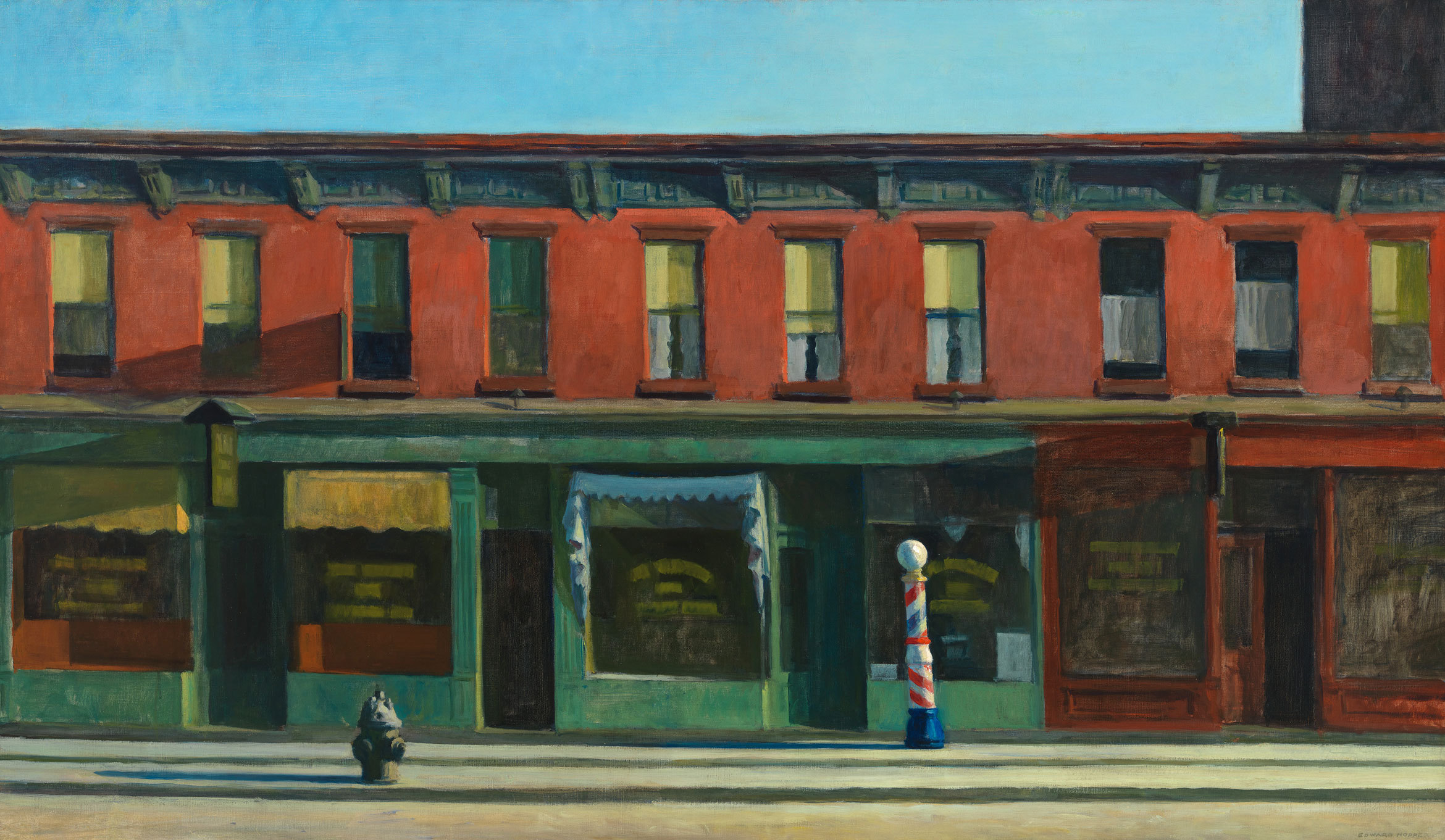
Early Sunday Morning
Edward Hopper
Early Sunday Morning (1930) is based on a New York street, but Hopper simplified the architecture, signs and human detail rather than copying the location literally. The Whitney notes the strong horizontal and vertical structure, long shadows and only indirect signs of people behind the windows.
Formal Analysis
形式分析
不要只命名视觉元素。说明这个选择如何改变阅读顺序、空间、情绪或意义。
The long row of shopfronts stretches across the canvas, making repetition and interval more important than a single focal object.
Low morning light creates long shadows and strong warm-cool contrasts, giving an empty street a charged atmosphere.
Curtains and different windows imply residents without showing them. Human presence is suggested through traces rather than figures.
Signs are unreadable and architecture is reduced to essential shapes, allowing mood and structure to dominate over documentary detail.
How the Work Creates Meaning
作品如何产生意义
The painting creates meaning through what is missing. Repeated windows suggest individual lives, but the empty pavement, simplified signs and long shadows hold those lives out of sight. The result is not simply “a quiet street”; it is a carefully constructed tension between ordinary urban life and temporary absence.
把你的判断重新指回作品本身:哪一个具体的构图、尺度、色彩、材料、字体、光线或人物关系支持了这个解释?如果找不到视觉证据,这个“意义”就还只是猜测。
Why Study This Artist?
对 A Level 高质量项目的意义
This is valuable for A Level projects about place, memory, loneliness, routine or architecture because it shows how students can begin from real observation and then selectively remove information. High-quality development comes from deciding what evidence to keep, simplify or omit in order to strengthen an idea.
Pearson Edexcel AO1 强调 sustained and focused investigation,以及 analytical and critical understanding。这里关注的是怎样产生这些证据,而不是承诺某个分数。
Research Questions
先写下你的判断
这里不会提供标准答案。先观察作品,再打开问题写下自己的判断。回答会先保存在当前浏览器;完成后可把每个回答保存成独立的 AO1 Reflection 卡,放进 My Project 的 Collection 和 Canvas。
Next Move
下一步实验
Photograph one street before people arrive, during peak activity and after closing. Make one study from each, then remove different kinds of information—figures, text, colour detail—and annotate which absence changes the emotional reading most.
完成后不要只贴结果。写清楚:我借用了哪一个方法?我改了什么?哪一版最能表达自己的主题?下一步准备保留或舍弃什么?